Deinfluence is a nonprofit built to disrupt social media by pulling back the curtain on addictive platform design and hidden, deceptive advertising. Deinfluence will also push for mandatory disclosure of AI-generated advertising and use litigation to enforce existing consumer protection laws.
The initial filings for Deinfluence have attracted press
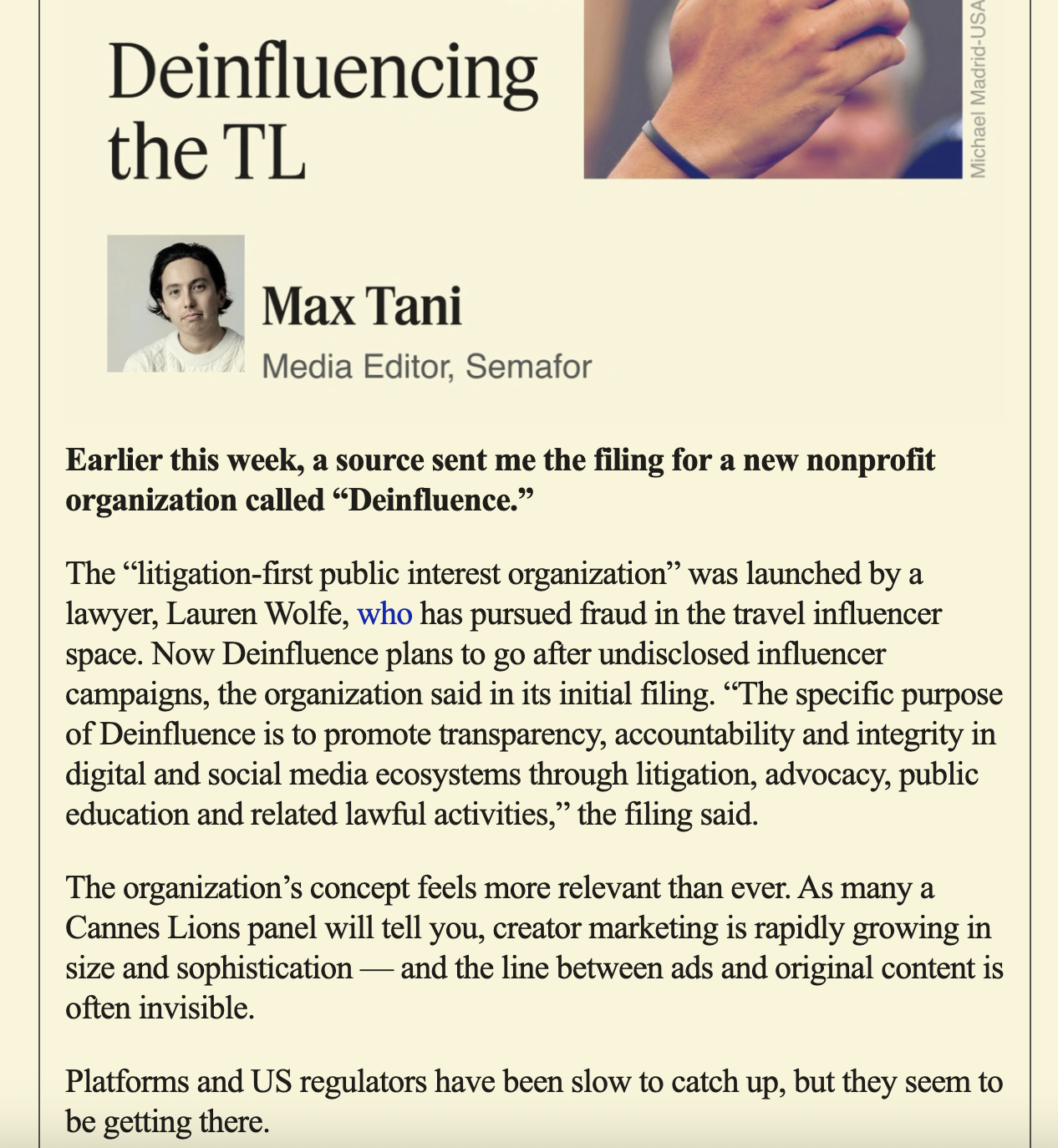
Semafor said “The organization’s concept feels more relevant than ever’’
Disrupting social media through litigation and policy.
Founder, Lauren Wolfe
Wolfe has worked for a decade as counsel for a litigation forward non-profit that established that state law could be used to sue influencers and hold them accountable for their statements on social media. She’s used the law in creative ways from establishing that influencers themselves can be sued under state law for their statements on social media to making sure influencers get served. She’s served influencers through Instagram and, in a likely first of its kind, over TikTok. As counsel for the non-profit, Wolfe has sued a variety of social media influencers for undisclosed advertisements using private attorney general actions in the District of Columbia. Wolfe has filed multiple cases of first impression and she has been able to consistently have the press highlight her unique work.
Her work regarding influencer litigation has been featured in the news:
The Washington Post - April 13, 2022
NBC News
Rolling Stone
The Daily Mail
Frommers
The Washington Post - March 16, 2024
The Guardian
CNN
Vanity Fair
Before working on litigation related to influencers, Wolfe led a relentless effort to end hidden hotel fees. Wolfe oversaw lawsuits related to five major hotel groups and put pressure on the FTC, State Attorneys General, state legislatures and the U.S. Congress. Today resort fees are banned federally and at the state level. The FTC even passed a new rule prohibiting hiding fees in short term lodging and ticket sales.
Her work to end hidden hotel fees has been routinely featured in the news:
CNBC - May 12, 2025
The Wall Street Journal - September 16, 2024
Good Morning America - September 2, 2024
The Los Angeles Times - June 18, 2024
The American Prospect - June 6, 2024
The Washingtonian - March 28, 2024
The New York Times - March 5, 2024
The Washington Post - February 16, 2024
The Washington Post - December 1, 2023
The New York Times - October 11, 2023
CNBC - April 25, 2023
Cal Matters - April 20, 2023
The Washington Post - April 6, 2023
The Telegraph - April 5, 2023
The Wall Street Journal - February 15, 2023
Vox - February 15, 2023
The Washington Post - November 1, 2022
CNBC - February 9, 2020
The New York Times - February 8, 2020
NBC News - February 8, 2020
The Wall Street Journal - January 29, 2020
Forbes - July 10, 2019
USA Today - December 27, 2019
The Washington Post - October 4, 2019
The Washington Post - August 3, 2019
The Boston Globe - July 2, 2019
Condé Nast Traveler - January 10, 2019
CBS News - December 27, 2017
Wolfe has a proven record of advancing bipartisan issues that enjoy broad public support but lack effective advocacy. Over the past decade, her sustained efforts to eliminate hidden hotel fees have reshaped how hotels and short-term rental platforms, such as VRBO and Airbnb, present pricing online. Building on that success, Wolfe is now focused on addressing the pervasive problem of undisclosed advertising on social media.